So you want to learn how to kitesurf? That’s awesome! We’re here to help you achieve that goal in a safe and fun way. You’ve probably got some questions about where to take lessons, and we’ve got some answers!
Each kiteboarding spot has slightly different conditions. Some conditions seem easier than others for beginners, but all conditions offer opportunities to learn and practice important skills.
Don’t forget! In order to be a fully independent kiter, you’ll need to be able to kite and feel comfortable in different conditions. Kiteboarding is done in many amazing places all over the world, and you’ll want to be able to kite in every one of them!
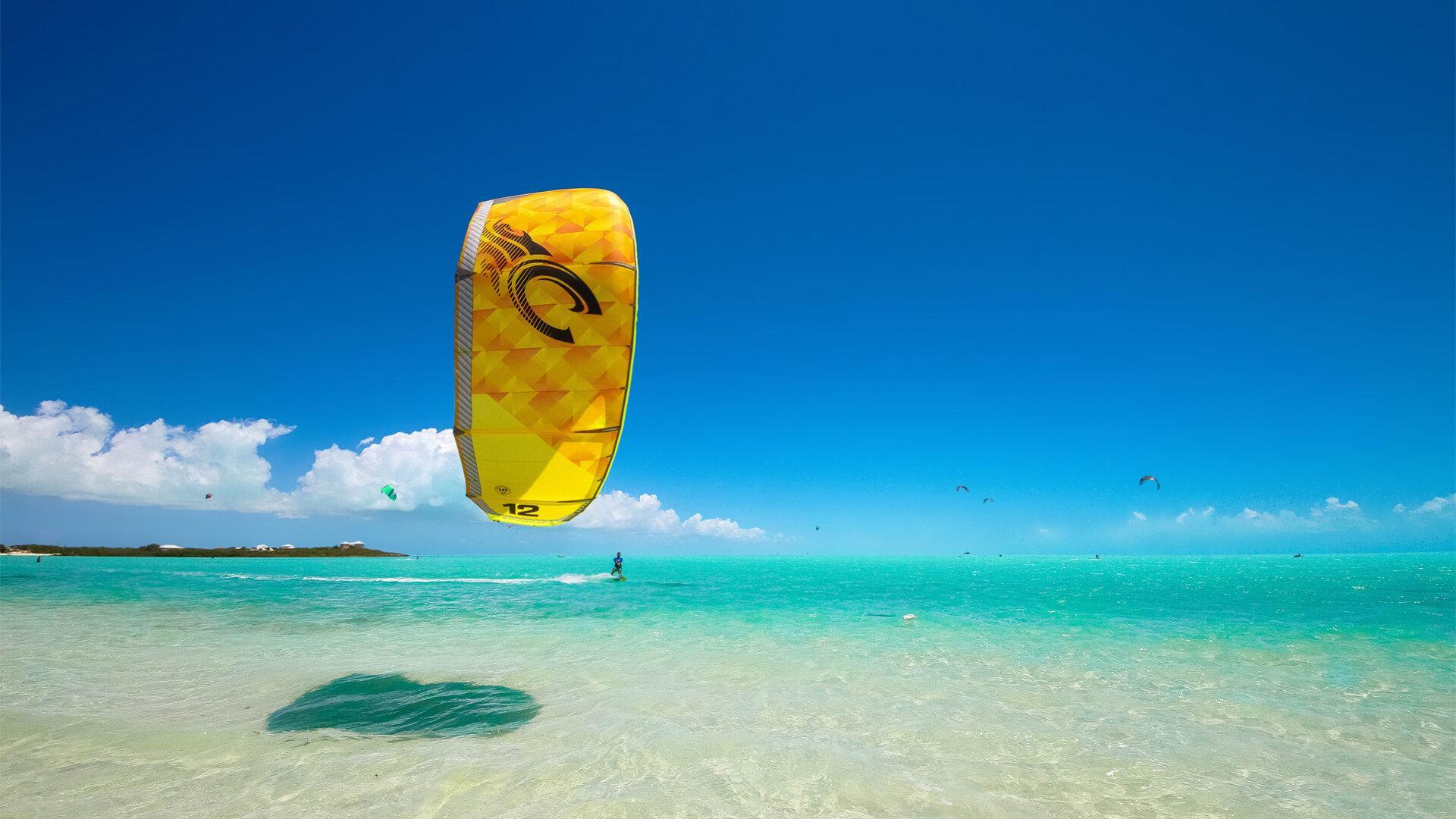
Flat water is great for beginners who are anxious about learning to kite in the ocean.
The predictability and calm of flat water can feel more comfortable while first learning.
Without the obstacle of crashing waves, a beginner can learn to kitesurf in a more controlled “building block” manner: focusing first on kite skills, then body dragging, board skills and board recovery. Once learned, putting those important skills together in flat water is fairly simple.
Small choppy water provides beginners with a very similar learning experience.
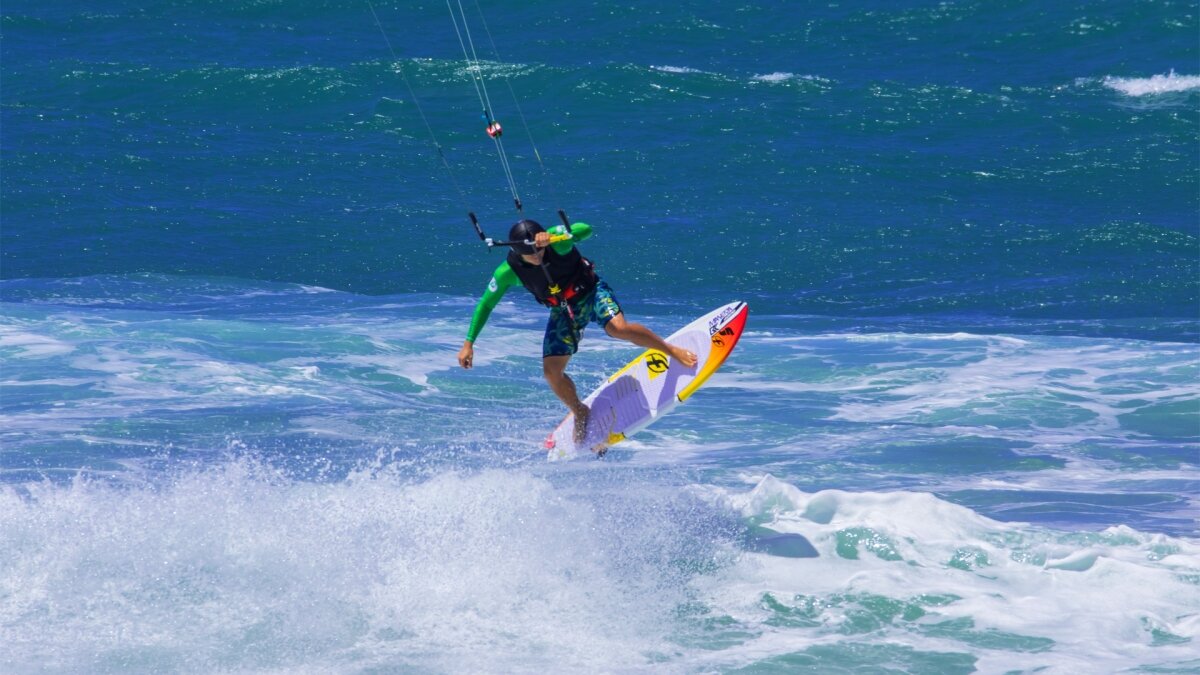
Wave spots present beginners with a bigger challenge when learning. The ocean is more dynamic than flat water, but taking kitesurfing lessons in waves is a great way to learn valuable kitesurfing skills like body dragging and board recovery. These are two of the most valuable skills in kitesurfing because beginners are constantly getting separated from their board. If you can’t recover your board, you can’t kite.
When body dragging in waves, kitesurfers must learn essential kite control skills, like keeping the kite low in order to pull themselves through. Learning how to position your kite in the sky is an important skill for body dragging, kiting upwind, and eventually jumping.
Learning how to read the waves is a skill only really learned in waves, and many beginner kitesurfers don’t have surfing experience. Once a beginner can read the waves, they can anticipate appropriate timing for actions in the water, including a water-start in the smooth section between waves.
Deep water and shallow water can be as different as flat water and waves. Shallow water allows the beginner to stand and be more “grounded” when learning kite control skills, whereas deep water provides beginners with more opportunities to practice body dragging and board recovery.
A lot of schools today offer either jetski assistance, boat assistance or two-way radio devices in order to maintain constant communication with students during lessons in both deep and shallow water. This enables instructors to give immediate feedback to students which speeds up the learning process for most beginners.
Strong (high) and Light (low) winds have different advantages and disadvantages for beginners learning how to kitesurf.
Strong Winds
Light Winds
The following are not necessarily related to water or wind conditions, but they are important factors for your overall introduction to this amazing sport and its community!
With all that said, you probably now understand that there is not ONE perfect place to learn to kitesurf and that all conditions offer benefits and challenges. In fact, the very best place to learn how to kitesurf is the place where you will actually go and take lessons.
A lot of beginners think they need exotic beaches with turquoise water and white sand beaches for learning, so they put off taking lessons until they can get the time off or save the money to go to those places. But the sooner you take lessons, the faster you’ll progress, and the more fun you’ll have with this sport. The best place to learn how to kitesurf is the place you can get to now! (or at least real soon!)

Keep in mind that kitesurfing is an amazing sport if learned and practiced safely.To ensure that you make the best of the conditions available at the spot you choose, book your kitesurfing lessons at an IKO Center. Every school who wish to join the IKO is required to go through an affiliation process to prove that they meet our safety and quality standards and this ensures that their teaching environment is structured and organized.
For a complete list of all affiliated IKO Centers around the world, check out our Centers page to introduce you to the most exhilarating sport you will ever do!
Ok, now go have fun and get ready for your life to become a lot more interesting and awesome! You got this!
Written by: Kristin Vincenzo